I have a confession that is only embarrassing in certain company: I quite like working with AI.
In most rooms this is an unremarkable thing to say. In my rooms it is not. My friends bake sourdough, mend their own clothes, ferment things in jars and carve spoons from green wood. They are, by any reasonable definition, the most accomplished tinkerers I know. They will happily spend a weekend learning how a scythe wants to be sharpened. And many of them have decided, on principle, that AI is the one material they will not touch.
I understand the principles. The companies behind these systems are extractive, the energy use is real, the training data was taken without asking, and the loudest voices selling the technology are people my friends would not trust to water their plants. None of that is wrong. But I have come to believe that the conclusion drawn from it, “therefore I will stay away”, is a mistake. Not a moral mistake. A strategic one.
This post is my attempt to explain why, with help from a Swedish pedagogue who died in 1907 and an American media theorist who is still very much alive.
A sly word
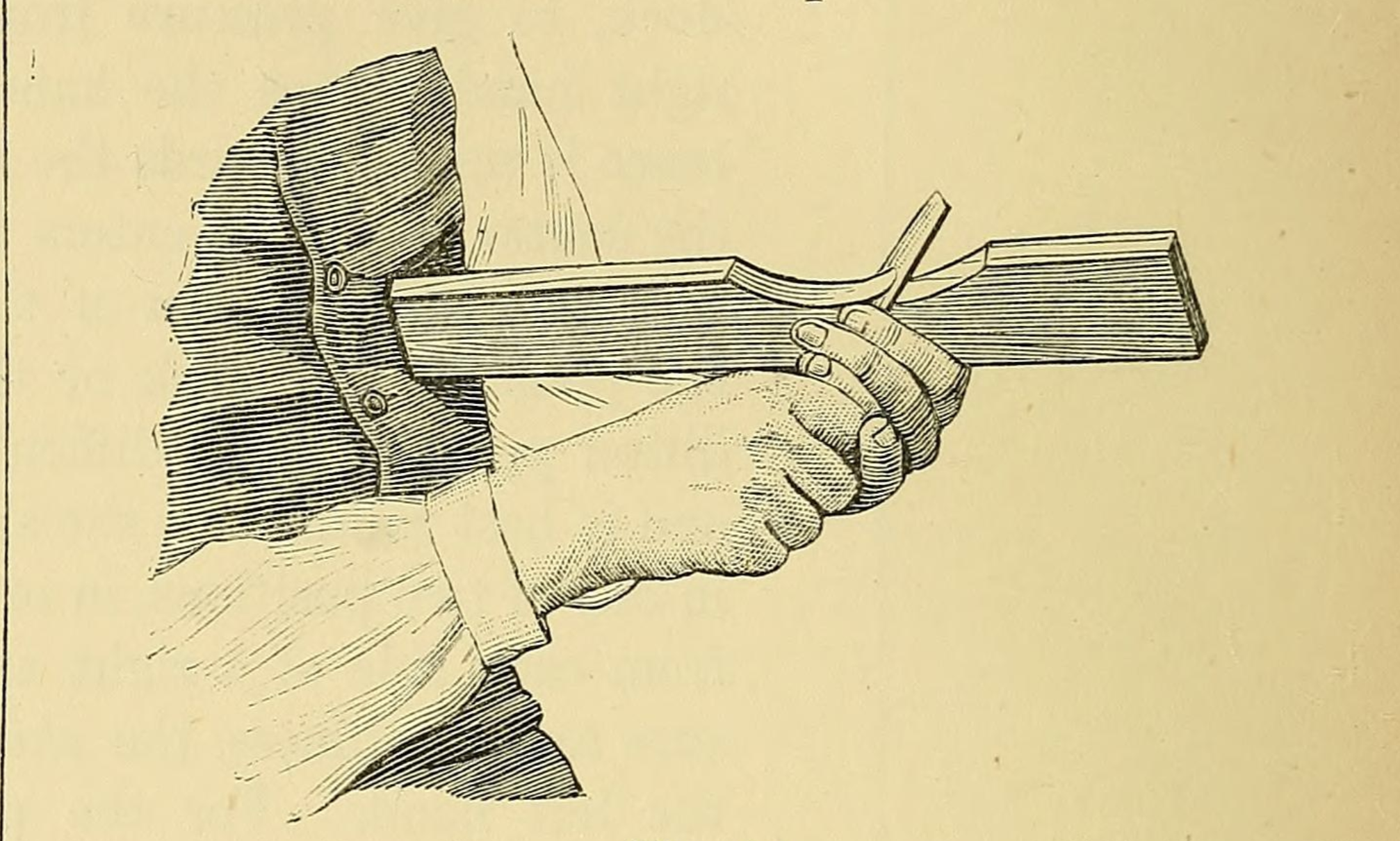
In most Nordic countries, schoolchildren still take a compulsory subject called slöjd. Today it covers textiles and woodwork; in its classic form it is the tradition that gave us the sloyd knife, and through it much of modern green woodworking and spoon carving. If you have ever watched someone turn a piece of fresh birch into a spoon with nothing but a knife and an axe, you have seen slöjd.
But the word is older and stranger than the craft. Slöjd descends from the Old Norse slœgð, meaning slyness, cunning. It is a direct cousin of the English sly and sleight (as in sleight of hand) and of the Dutch sluw. Buried in the name of a woodworking class is the claim that making things with your hands is a form of cleverness. Not dexterity. Cleverness.
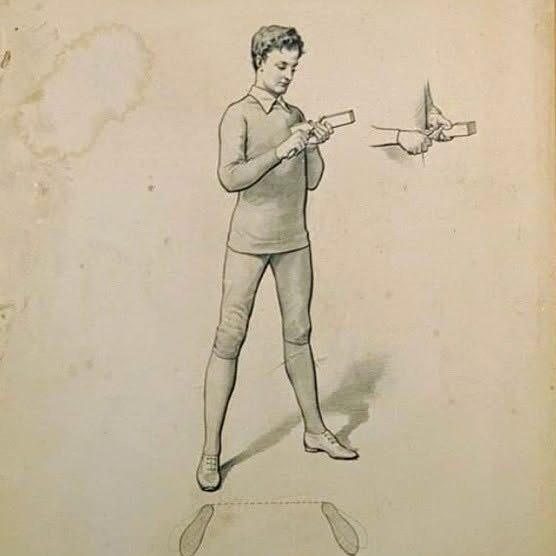
The man who built slöjd into an educational philosophy understood this perfectly. Otto Salomon, who ran a teacher-training school at Nääs from the 1870s, was emphatic that the point of his system was not carpentry. He was not training joiners. The spoon, the butter knife, the little stool. These were instruments for forming something in the child: judgment, patience, honesty about one’s own errors, the confidence to attempt a problem you have never seen before. Educators travelled to Nääs from around the world to learn a system whose central insight was that the object you are carving is never the real object. The real object is you.
Anyone who carves spoons knows this is not romantic exaggeration. Green wood does not care about your plans. It has grain, knots, tension, moisture. You learn to read the material, to work with what it offers, to recover from the cut that went wrong. The spoon is almost a by-product. What you actually take home after a session of spoonfulness is a slightly reorganised brain.
Program or be programmed
A century and a bit later, Douglas Rushkoff arrived at the same insight from the opposite direction. His 2010 book Program or Be Programmed made a blunt argument: every communications technology asks something of us, and if we decline to learn how it works, we don’t escape it: we just experience it on someone else’s terms. You do not have to become a programmer. You do have to understand enough of the machinery that the machinery cannot understand you first and take advantage without you noticing.
Rushkoff is nobody’s idea of a tech booster. He has spent decades criticising exactly the Silicon Valley culture my friends distrust, which is why it matters that in 2024 he reissued the book with a new, eleventh command written specifically for the AI era. He has not softened on the companies. He has, if anything, sharpened the original point: opting out was never on the menu. These systems are already shaping your news, your job market, your kids’ homework and your government’s decisions. The choice is not between using AI and abstaining from it. The choice is between meeting it with your eyes open or your eyes closed.
And then, in a recent essay, he wrote a sentence that could have been carved over the door at Nääs:
The value of the AI is not its ability to create product for us, but to engage with us in our process.
Rushkoff is describing what goes wrong when people hand AI the whole job (the report, the pitch, the presentation) and let it produce a polished product while their own competence quietly atrophies. He calls it deskilling, and he points to an MIT study suggesting that people who reach for AI before working on a problem form fewer connections in the brain, while people who wrestle with the problem first and then bring AI in end up with more than if they had worked alone.
Read that back through Salomon. The product is never the point. The process is what forms you. A nineteenth-century woodworking teacher and a twenty-first-century media theorist, saying the same thing about completely different materials: what matters is not what the tool makes for you, but what working with the tool makes of you.
What tinkering actually means
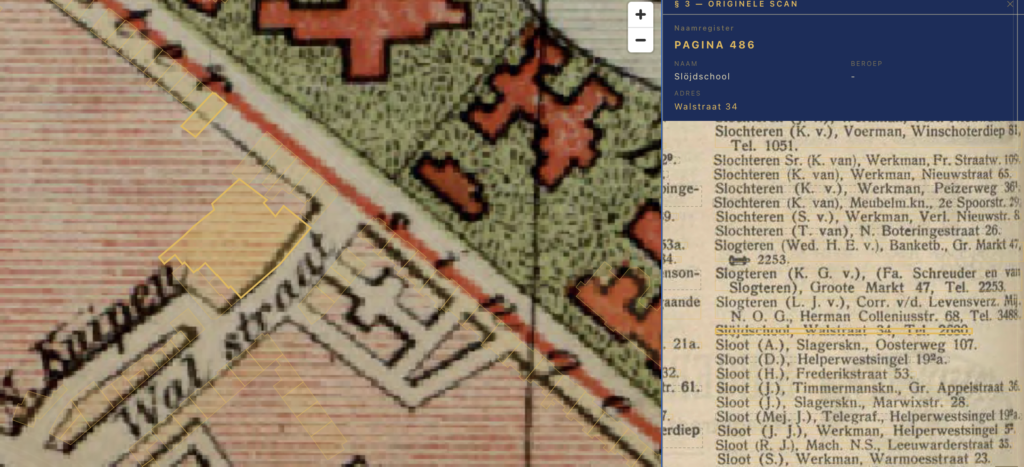
Here I should be honest about my own process, because I do this for a living, more or less. I work in digital heritage, and over the past year I (as a side project) have used AI to help turn a 1926 address book into a searchable, mapped digital edition. I wrote about that project recently, and the lesson I keep relearning is that the work is nothing like the marketing. The model gets things wrong in instructive ways. Problems that look like AI problems from a distance usually turn out to be ordinary data problems up close. The technology is less magical and less menacing than both its salesmen and its critics suggest — but you can only discover that by handling the material.
That handling is what I mean by tinkering, and it is worth distinguishing from mere use. Most people who say they have “tried AI” have asked a chatbot for something and judged the answer. That is shopping, not slöjd. Tinkering is what the carver does with an unfamiliar wood: probe its edges. Ask the system about something you know deeply, and watch precisely where it goes wrong. Push it until it fails, and study the failure. Actually read its reasoning or the code it produces. And (this is the strange privilege of this particular material) ask it to explain what it is doing. No previous tool could narrate its own mechanism, however imperfectly. The knife never told you about grain. This one will sit with you and discuss it.
You will not come out of this loving AI. You may come out disliking it more precisely. That is the goal. Salomon did not want children to love wood; he wanted them to be formed by the encounter. Calibrated distrust is a craft skill, and it cannot be acquired by abstention.
Without feeding the machine
The fairest objection from my friends is not about understanding but about complicity: every prompt sent to a big provider is a small vote for an industry they oppose. So here is the part I most want them to hear: the choice between using AI and boycotting big tech is a false one.
There is a thriving world of open-weight models you can run on your own computer. No subscription, no account, no data leaving your house. The experience is rougher, slower and more honest, which makes it better material for tinkering. I have been experimenting with local inference myself lately, running models on my own hardware for transcribing audio, printed and handwritten text, and other experiments, and I expect to write more about it here. If your objection to AI is the corporation attached to it, local models are modest, self-reliant, and entirely yours.
The clever hand
Which brings me back to that sly old word. Slöjd was never about spoons, and this post was never really about AI. It is about a conviction my friends already hold, more deeply than anyone I know: that you understand the world by working it with your hands, that competence is a form of freedom, and that the things you refuse to understand end up understanding you. And knowledge is power, also when someone else has it over you.
AI is simply the newest material to arrive in the workshop. It is knottier than birch and considerably less charming. But the old pedagogy holds: carve into it. Read its grain. Make it fail and study the failure. You are not making anything, remember: you are being formed, on your own terms rather than someone else’s.
The Old Norse knew what they were naming. Be sly. Be sluw. Tinker or be tinkered with.
Epilogue
While writing this, I somehow managed to miss Rushkoff’s newer essay, “The Internet Felt Like This in 1994. AI Might Be Our Last Chance.” It turns out he has now done, very publicly, the thing I was describing here in more general terms.
He did not suddenly become an AI booster. If anything, the piece is full of the same unease that makes his work useful: the environmental costs, the labour questions, the surveillance infrastructure, the billionaires waiting to enclose whatever remains open. But instead of staying at the level of refusal, he installed Claude in his terminal and used it to rebuild his website and archive. He handled the material.
What struck me about the essay is not that Rushkoff has changed sides. He has not. He has moved closer to the object of criticism. He is asking, in practice, whether AI can still be used to build mutual aid, platform cooperatives, community infrastructure and public alternatives before the whole thing hardens into yet another machinery of extraction. In other words: the question is whether communities can tinker with the infrastructure before the infrastructure tinkers with them.
That makes me think the argument above should be read less as a defence of AI use than as a defence of informed contact. The true Luddite position was never ignorance. It was knowing enough about the machine to oppose its use against people. Rushkoff’s new piece sharpens that point. Calibrated distrust is not acquired from a distance. Sometimes you have to put the tool on the bench, pick it up, and find out exactly where it cuts.